zondag 8 mei 2011

Vocational Activities in the third week

Dana High School and ATS (Alternatives to Suspension)

Today we met a special man, Mike, with a special job. Mike works for the City Hall and has a little office inside of the Dana High School. His specialty is early intervention and support towards (at risk) youth. The students of Dana High and students from other High schools in the area can visit Mike for support. Mike is an ex addict (clean for 30 years) and supports students with drugs and alcohol abuse, support the families/ parents and provide experience learning camps (together with Rotary).
The school itself has got no budget for this kind of care, because interfering of the city hall its possible. 
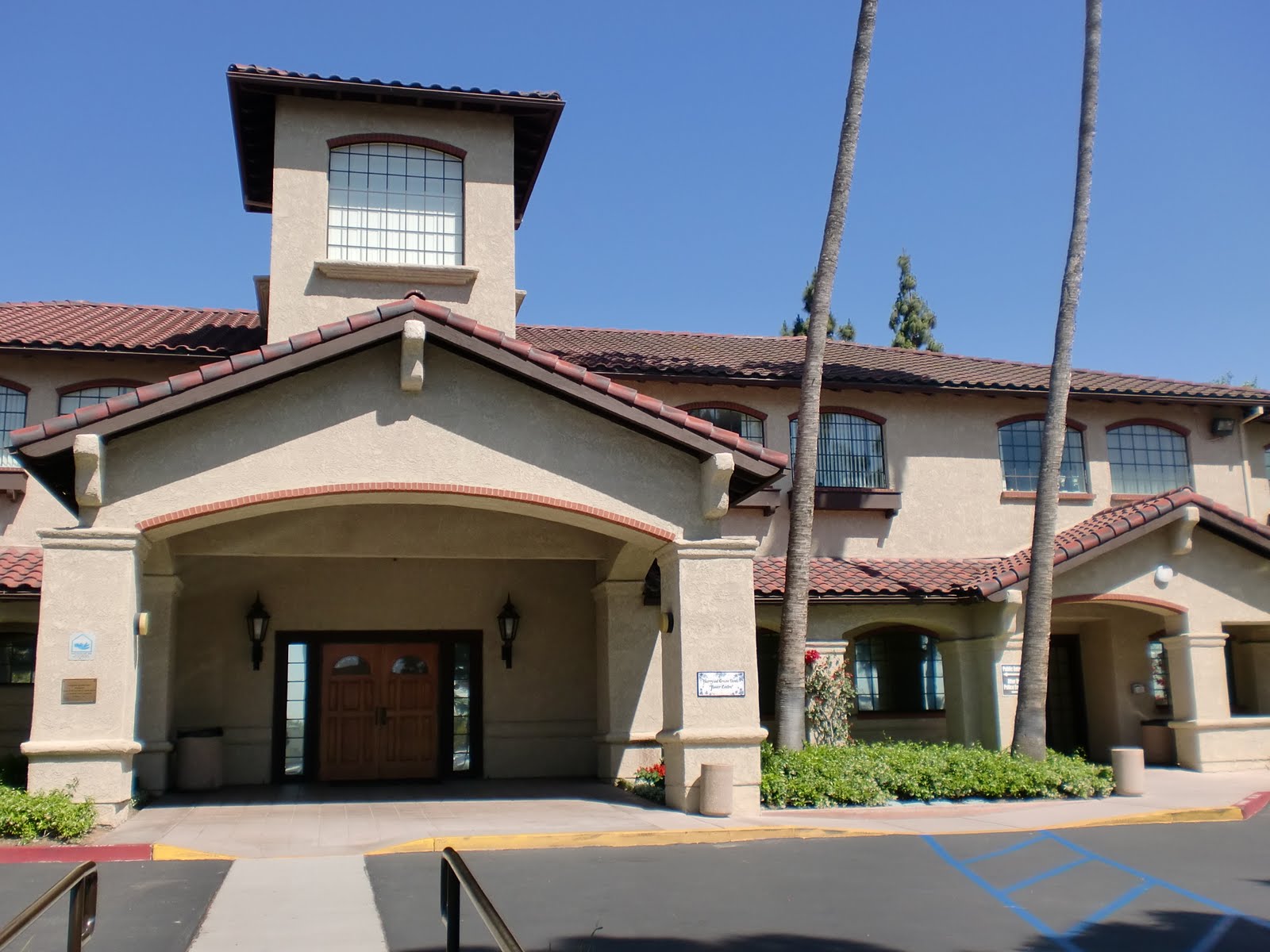
Mike gave us a tour around Dana High. This is a high school with lots of possibilities for students (creativity and sports). It is a public school.
One thing that surprised me was the melt pot of different students with different possibilities. Dana high is a school for regular students, students who need special attention and students with severe special needs (mentally and psychically handicapped) in the back of the building. Students can volunteer themselves for the buddy-project and help there colleague-students who need more support and care.
Mike told us that all the special education has been cut down and the schools had to accommodate the special education without extra money. Dana High got three academic psychiatrists that are focused on the special education. Regular students can’t apply these academics because they have to focus on the special need students.
Mike told us there is a big drug problem. Last month there was a girl that toke an overdose and died. There are a lot of students doing drugs (marihuana, meth and xtc) and a lot who think they need drugs (Ritalin) for a better concentration.
If the school is worried about some students they ask Mike to observer them for a while and make contact with there families.

After the tour we went to the project ‘Alternatives To Suspension (ATS)’
At the ATS are students who got suspended from there school or got kicked out. Mike visits this project every day and does a group meeting with them.
We were invited in this meeting, it was an incredible experience. Mike introduces himself to the students that did not know him and asked the students there name, age and the reason they are with the ATS. The reasons the students were there where very different, some where from an experimental puberty behavior, others from stupidity and some very disturbing behavior.
Mike is not a counselor and told the students they can call him and visit him if they need them. He was very confronting and motivated towards the students.
There are three social workers (with professional clinical background)  that lead this program.
Unfortunately there was not enough time for interviews with these professionals. I am emailing with one of them because o have a lot of questions about the assumptions and treatment of these students.      

Creativity:
It’s a good thing that students with (severe) special needs are in an environment as normal as possible and that students can help each other from a volunteer base (no extra grades). School created a reasonable alternative for the ridicules decision the county or government made by cut down special education facilities.    

Boys Town
My second vocational visit this week was at Boys Town in Trabuco Canyon in Orange County. Boys Town is a residential care facility for children and adolescents who need treatment, have to learn social skills and guidance in being more independence. Boys Town works with the family and guiders of the children and adolescents.
In Boys Town there are several cottages ‘treatment family homes’. I visited a treatment home for female adolescents. In these homes lives a family (man and a woman) who are trained to give treatment and educate the girls who live there. There is another care worker active inside the home. These girls go to school (picked up by the care worker). The ‘parents’ are 24 hour available.
The treatment:
-          The same faces they see
-          Role modeling by ‘parents’ for the girls and there family
-          Social competency method *(rewarding cards and goals)
-          Normal as possible environmental possibilities.
-          Daily routine
The girls can live here as long as they need. For some its temporarily and for others sometimes years. Boys Town is mostly the final station of the youth care.
Boys Town is a state funded organization.       
Different from the other organization Boys Town provide there care and cure towards court mandated children, orphans, private funded children and volunteer based children. The last target group is possible because Boys Town does there placements within a balance. They don’t get any money for the volunteered children but they get extra money for the private funded children, this way its in balance. The government only funds the court mandated children and orphans.
I met these professional, friendly, strong ad sweet ‘parents’ of the treatment house, they have an amazing job that deserves a lot of respect. There heart and soul is with these girls.

After this interesting experience it was time for some critical questions.
The executive director of Boys Town confirmed my theory. He confirmed that there is a grey area within the care and cure for children. He told me an example of a boy who got treatment from a care organization, did a lot better so the court removed the measure through which the court involvement stopped and he had no case manager anymore. His parents didn’t  want to have anything to do with him, he had no criminal history. Officially he was not qualified for help what so ever (the grey area). This boy considered to accuse his father of abuse or to commit a criminal crime so he could come into the system and get the help he needs.

What is the idea of the government about children and adolescents who needs protection, guidance, care and/or cure.
Is it the idea that these at risk children have to be removed from the streets because of inconvenience for society or that these at risk children need care, cure and or guidance they deserve. Its not that black and white of course but on the other hand;   
If the government thinks the future of a child is important and the development of children with special needs (in every way) they would fund it.  

All the extra facilities and treatments are possible because of involvement of volunteers, something we can learn from in the Netherlands.             


dinsdag 3 mei 2011

Day one of the third week

Today we met our new host family Rick and Sue. Rick and Sue have a beautiful bed and breakfast with ocean view. Laura and I stay in there house.
They put on the Dutch Flag for us to we feel welcome, wel it worked!!!


maandag 2 mei 2011

Two day break

Actually it was one day and one evening for ourselves. Within this period and within this environment relaxing is not that hard:  


Week 2

The second week we were with the Newport Irvine Host Rotary and families.
I met my wonderful host family, Ed en Carol Smith.
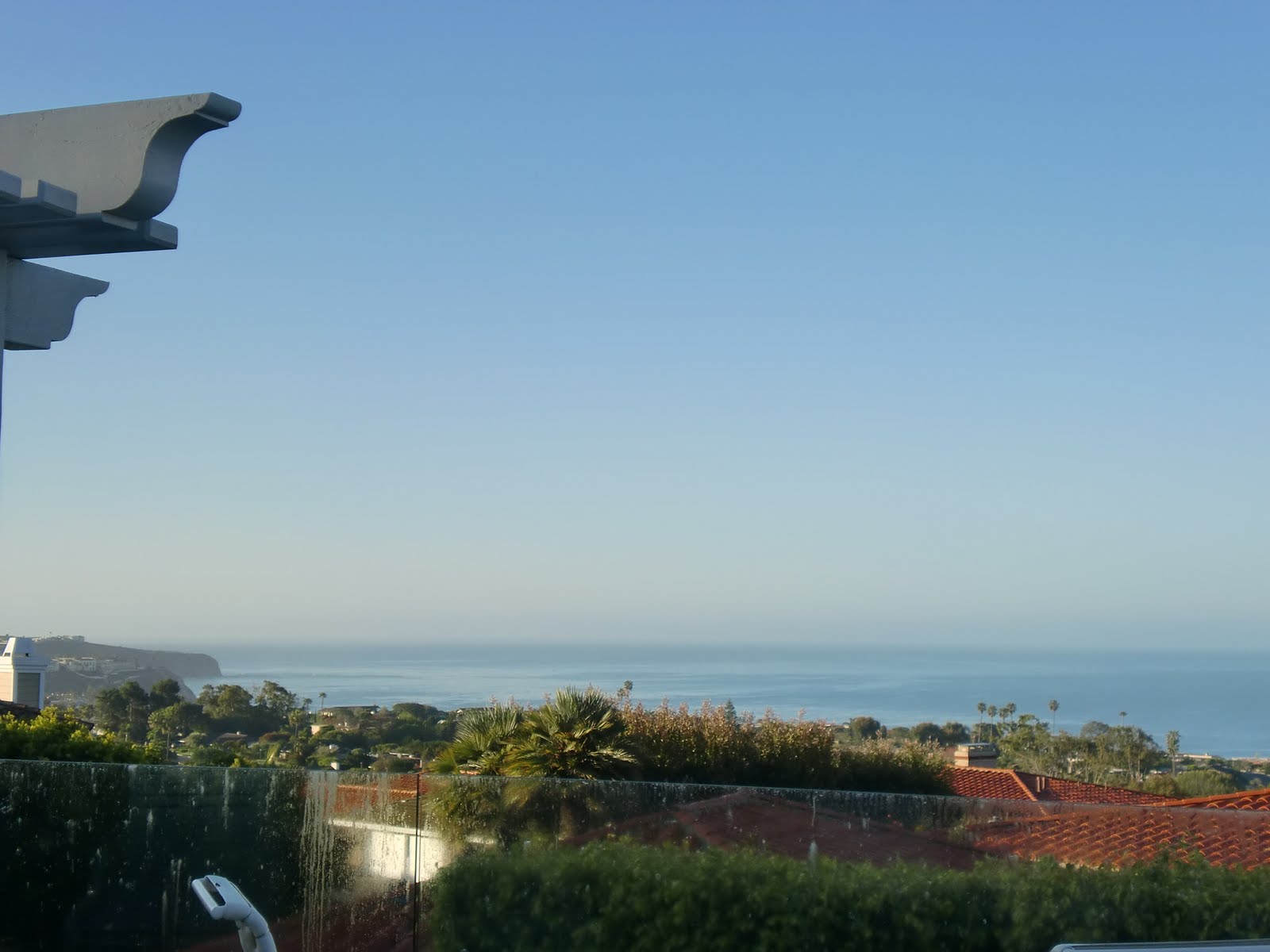
Staying at the Smith’s house it was a gift every morning. When I crabbed my cereal and fruit this was my view:

On Tuesday we went to a bullying prevention presentation. In this presentation we find out that gangs are a big problem in California. Behind the beautiful hills, mountains and nature there is a sad and criminal live full of danger  struggle in good education because of the gang related activities. The community wants to help build programs teach teachers about early intervention. When we visited another Peace and Study program at the University of Irvine we had a wonderful workshop of early intervention in criminal activity and gangs. We visited a program that teaches teenagers how to make good music and express themselves. They believe in making music without a lot of talking. This is something the social workers in the Netherlands can learn from.
The educational system in the Netherlands is better then the educational system in The USA, but the different sports, activities in and around the schools and options for expression is something we are underestimating. Dutch people have to do normal because then they are already crazy enough, but you cab be normal with a little more options for expression.
In the same University we talked to a lot of interesting people (teachers and professors) about there ideas of creating a better world by taking small steps and inspire there students. One of the most interesting programs of the university of Irvine is the Olive Tree Initiative.; They are a diverse student faculty and community initiative promoting dialogue and understanding about conflict zones through experiential education. The students wanted to respond to tensions on the campus (The Israeli- Palestinian conflict) the students and the University were inspired to create a forum where they could discus and learn about their different perspectives and embark on a educational trip to the region (two week trip to Israel/ Palestine to meet politicians, religious authorities, activists, etc).
University of Irvine
In the middle of the week I met Lou (Louis van Loghum). Lou was born in Amsterdam and lives in California for 35 years with his wife Rosalie (Roosje). My host Ed had to work and asked Lou to take me to the activities in the program. Lou I amazing and I’m glad I met him. It didn’t take long for us to have a little discussion. I told Lou that we are teaching the American people to say The Netherlands instead of ‘Holland’. There are more provinces in The Netherlands. Lou is a real ‘Hollander’ so this was are first typical Dutch conversation. Lou told me what it is like for a Dutch person to live in California.
After a busy day we picked up Rosie and went to  a good restaurant for dinner. It was a wonderful experience.
Lou and Rosalie
On Friday we had our presentation on de Rotary District Conference. Our presentation went well and afterwards there was a party outside (hospitality night), there was drinking involved and we danced a lot, it was very nice. There were some host families from orange and other Rotarians we already met. We also met a lot of new Rotarians.
Short presentation at Thursday

Big presentation at the District Conference in our Dutch clothing

Bil (Laura's host before hospitality night)


dancing at the hospitality night

 At the end of the week we hd a boattour with a beautiful view. We could see some see lions in and around the harbor. These seelions are three times bigger then the dutch seelions and more agressive. If you have a seelion on youre boat you have a problem.
Beautiful view
After a nice dinner with my host family we went home and the next day they deliverd me at the Holiday Inn in Sen Clemente for a two day break (Sen Clemente looks like the Riviera).

3 Vocational Visits

I visited 3 wonderful locations who were vocational. At first I explain there methods and later on some comparing.

Orangewood

Orangewood Children and Family Center (OCFC) is a 24-hour emergency shelter care facility operated and owned by the County of Orange Social Services Agency (The System), for children who have been abused, abandoned and/or neglected; and is licensed as a group home.  
We get a tour around the property.  Orangewood has got 6 cottages (young children, boys, girls, male adolescents, female adolescents and a 23-hour group).
The goal of Orangewood is to place the children/adolescents as soon as possible in a healthy environment (family, foster families,  other parent, group home or in the worst case Juvenile).
The 23-hour group is interesting. After a 23-hour stay of the child, the county considers a placement. Everything below 23-hours stay it is not an official placement and is temporarily stay. Orangewood is a shelter and not a cure centre so when they place a child within 23 hours in a family it is more helpful for the child and Orangewood did a good job.
Unfortunately that is not always the reality. For the other children and adolescents are the cottages where they can stay for 30 days, with a max of 90 days up to a year. Because I work with the adolescents I talk about them in my report.
In these cottages live maximal 8 adolescents (male and female separate). There has to be 1 group counselor on every 4 adolescents.
A group counselor does not need a master or bachelor degree, they need experience, a young development of the child training and several other raining the organization requires them to do.  
Besides the fact that there are professionals from the health care agency (psychiatrist, social workers, nurses) they are not a ‘cure’ centre and can’t provide the adolescents official treatment, they don’t have the license for it, because they are a shelter.
In reality the most adolescents can’t be placed immediately in foster care or family and some of them live in orangewood for up to a year, its Orangewood or the streets. Because orangewood realizes that a lot of adolescents need some sort of treatment they give them group counseling sessions such as STOP GAP, ALATEEN, peer group counseling, and independent live skills. I have asked him about EQUIP (they are not familiar with EQUIP (peer group training/therapy we use in our unit).
The use the ‘niveaukaarten’ we use. Adolescents can deserve points by learning skills, work on there goal so they earn privileges (later bedtime, game time, more allowance). The competency method is a well used method in the USA.
Parents are welcome in orangewood, they have to make a appointment and court have to approve that they are here.
Every child/adolescent is here on court order, no volunteer base (county funded you don’t have to be insured).      


Canyon Acres

Canyon Acres is a beautiful health care clinic. They provide day treatment for children in the age of 6-12. They used to be a residential care (inpatient) and since a few year a day treatment centre (outpatient). They switched because they think it is better to help a child from his own environment and not to remove the child from his environment.
Later on I discovered that this was true but there was another element for the switch. This was also a political decision, the county refused to acknowledge that in there county this target group was reality. The children who used to  lived in Canyon Acres were not replaced with there family (there problems and mental disorders where to heavy that was not possible), so they were placed in group homes within The USA.
The day treatment takes cash pay, private insurance and medi-cal (heavy criteria state insurance).
Most of the parents can’t afford this kind of treatment.
For those who can Canyon Acres offers therapeutic services in a beautiful Anaheim Hills campus and conveniently located Office in orange.
They provide drama therapy, horse therapy (take care of a horse, learn to ride a horse  and building a relationship), music therapy, art therapy, swimming. They work together with al lot of professionals and offer the families valuable time-tested support and education for children within al ages (Triple P, Love and Logic, The incredible years).       
After school, the group counselors pick the children up from school, the children stay there until 07:00pm max and they return to there families. Every child has his own file and goals he is working with.


Olive Crest

Olive Crest is dedicated to preventing child abuse, to treating and educating at-risk children and to preserving the family…’One Life at a Time’.

You can compare Olive Crest with a Elker (the organisation I work for).
Olive Crest is a big organisation that provides protection, care and cure for children and adolescents.
Olive Crest provides help to those who are in ‘The System’. These children and families are in the system because of a history of physical child abuse and neglecting, most of them were placed by court mandate.
A big difference between Olive Crest and Elker is the help Elker provides to children and adolescents who were placed on a volunteer base  with approving of the family (without court mandate) and the reason for placement at Elker is not necessarily child abuse or neglecting, but dysfunction of the family because of severe behavioural problems of the child, mental disorder of the child and/or parents, unstable home situation or threat of a dangerous peer-group.
After removing from the house Olive Crest tries to find a suitable family or foster care for the children and adolescents, if there is no family or foster care available or possible Olive Crest provides residential care. They provide different residential homes for different target group.
Orangewood is a referrer to a group home of Olive Crest.
We have seen some cottages (the rotary sponsored the environment of these cottages) for different target groups. I tell you about two groups.
In every group home lives a hostess, she can live there for free and keep an eye out and help the children and adolescents. There are also group counsellors who are trained within the competency assumptions towards the target group. They keep the sexes separate, if they are brothers and sisters they can live in the same house, but that’s a tough one on the matching with other adolescents. This is a problem because if they keep separating the sexes the unit is never entirely filled and they receive less money.
The adolescents learn social skills, skills for independencies, treatment by a psychiatrist of behaviour therapist if needed.
Olive Crest also has a Transitional Housing Placement Program, this program provides them housing and support for ages 16-18 whose only option as they approach adulthood is living independently. 

The placements in this organisation is state funded because its mandated by court.   


Personal observation

After visiting several organizations, talking to different professionals it seems that there is a grey area in the youth care system.
What about the adolescent that is not criminal, no court mandate (yet), not abused/neglected, not an orphan, has severe behavioral problems and (probably) mental disorder who still lives at home and is not be considered for medi-cal (heavy criteria state insurance).
So it seems the government has no place for this special target group, first they, or the situation have to get worse for care and cure to come. What is the criteria of a more worse situation? 
There are some church initiatives and community initiatives but then you have to belong to this community or church and its depends of the funding they are getting. Foundations like this exist because of generous people who care, a bonus is the tax refund they receive. Most of the time the more welfare people give amount of money to initiatives and foundations.
As long as there is no general health insurance system the more welfare people can decide to give financial gifts to organizations and foundations they prefer. The more welfare people determine which target group receives help if they have no money. 
I want to challenge this personal observation for the next two weeks.                 


Bye Bye Orange

We said goodbye to the first wonderful team of host families of Rotary Orange.
From left to right; Tito, Moira, Bill, Mike, Jean, Diane and Spud


zaterdag 30 april 2011

Monday (last day with the First Host family)

Monday was my last day with my First host family.

This morning we visited Cristal Cathedral. It is an impressive building and area. In the Netherlands they broadcast the Hour of Power on the Dutch television.


In the afternoon April gave me two vocational visits. Orangewood (Shelter care) and Canyon Ancers (Day treatment). In the next days I will visit more organisations in my field of work and compare them with each other.

At 6:00 there was a Farewell dinner with al the host families. It was a nice dinner. After dinner we went home and shared the evening together.  
The Dutch GSE presentation outfit

Group picture with GSE team and the Host families

The Alvarez family and me